 ภาษาไทย
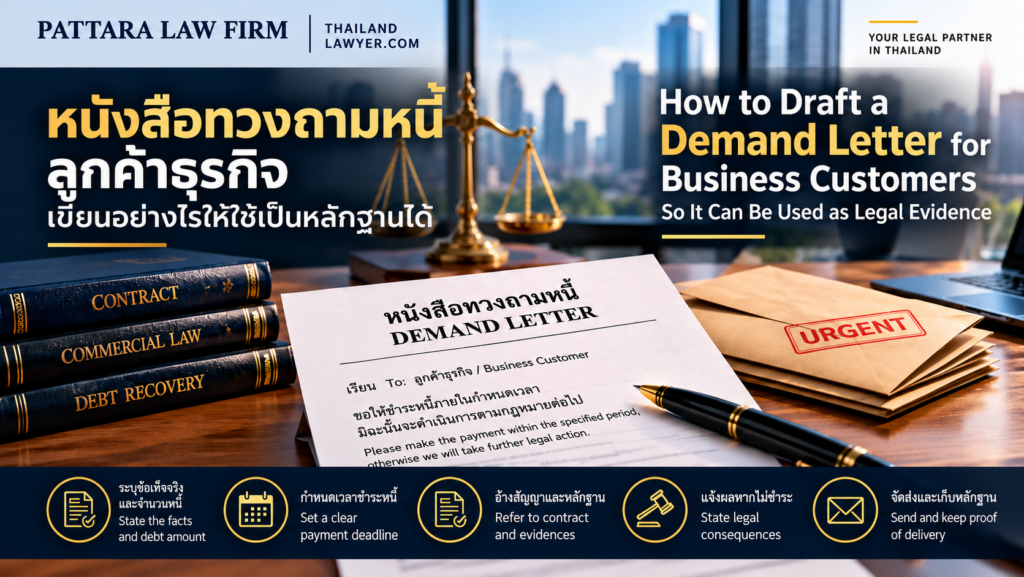
Short answer: A demand letter under Thai law should identify the debt and its source documents, give a reasonable deadline, state statutory default interest and be delivered in a way that proves receipt. Where no calendar due date was agreed, it is the warning that puts the customer in default.
Why the letter matters
Under CCC Section 204, a debtor without a calendar-fixed due date is in default only after the creditor’s warning. The letter therefore fixes the date from which default interest runs and becomes key evidence in any later claim.
What to include
- Full names and registered addresses of both parties
- Invoice numbers, delivery notes and delivery dates
- Principal outstanding, shown separately from interest
- Default interest under CCC Section 224 at the Section 7 rate plus 2% per year, without compounding
- A reasonable payment deadline and bank details
- The next step if unpaid, stated accurately and without exaggerated threats
- Signature of an authorised signatory or the instructed Thai lawyer
Language and delivery
A Thai-language or bilingual letter reduces later disputes about understanding and translation. Send it by registered mail with return receipt to the customer’s registered address; email can supplement but should not be the only proof of delivery.
Individual debtors
If the customer is an individual, the Debt Collection Act B.E. 2558 (2015) may govern how you collect. Avoid threats, insulting language and disclosure of the debt to others, and take advice on permitted contact methods.
Consult a Thai Lawyer About Demand Letters and Commercial Debt Recovery
If your business is facing unpaid invoices, overdue customer payments, or difficulties recovering outstanding commercial debts in Thailand, a properly drafted demand letter can be an important first step in protecting your legal rights and documenting your efforts to recover payment.
Pattara Law Firm provides legal assistance to Thai and international businesses, including reviewing contracts and supporting evidence, drafting formal demand letters, negotiating debt settlements, initiating civil proceedings, and enforcing court judgments where appropriate.
Our legal team can help you assess your position, prepare a demand letter tailored to your circumstances, and determine the appropriate next steps if your customer fails to pay.
- Telephone: +66 99 249 5989
- LINE Official: @patt
- WhatsApp: +66 99 249 5989
- Email: info@thailandlawyer.com
Protect your business interests and take the right steps toward recovering unpaid debts. Contact our legal team for professional legal assistance in Thailand.
Need Further Legal Guidance?
You may send us a brief summary of your matter for a preliminary review by our legal team. Alternatively, you can contact us directly via the channels below.
 About the Author


